
Industry 4.0 will not save Germany
Summary
Germany develops some of the world's most advanced manufacturing technology, but its own firms struggle to deploy it. This article asks why.
The standard narrative - energy cost, regulation, bureaucracy, talent shortages - explains pressure on Germany's industry but not why advanced tools fail to diffuse through it.
German manufacturers, especially in the Mittelstand (SME), lack the absorptive capacity to integrate architectural change into systems optimized for incremental innovation in stable product categories.
My diagnosis is supported by shop-floor experience inside SMEs, academic research, and macro signature of capital distribution.
Germany's industrial substrate remains strong - rank 6 globally, the highest engineering share of any OECD economy. Whether that substrate can be deployed before the absorption problem hollows it from within is the open question.
During my visit to the Hannover Fair 2026 a few weeks ago, I saw cutting-edge technologies, great solutions, and systems that showcase why Germany maintains its leadership position in global rankings of industrial complexity.
The Hannover Fair showcased the connected factory (smart factory), where machines communicate with each other, providing information and even generating orders or service requirements automatically through interconnected vendors. I've seen humanoids, digital twins, AI controllers, AI PLCs, AI MES/SCADA systems, AI this and AI that, and much more.
But it became evident that most of the showcased technologies would never achieve their full potential for German SMMs (Small and Medium Manufacturers) and SMEs (Small and Medium Enterprises).
I'm not satisfied with the usual narrative, like talent shortage, energy costs, regulation challenges, and so on. While I accept that these are challenges, I think they are oversimplifications of the multifaceted challenge that German SMMs and SMEs are facing.
So why won't these working tools translate into competitive growth in the firms buying them?
The answer is not that simple and requires us to create a comprehensive picture of Germany's industrial base. My goal is that at the end of this article, we will have the datapoints to create a structural answer to this question.
Move beyond the standard German manufacturing narrative
As mentioned in the introduction, I accept the standard narrative for Germany's industrial challenges, such as:
High energy prices
Too much regulation
Bureaucracy
Talent shortage
Aging workforce
Outsourcing
China competition
Weak digitalization
Slow permitting
Tax burden
Underinvestment
There are tons of articles that use these points to create the same old narrative that we've been reading for the past 20 years.
These factors explain why pressure is rising. They do not explain why Germany struggles to convert advanced tools into renewable industrial capabilities.
So we need to focus on deeper questions, like whether Germany has the industrial architecture, capital structure, supplier relationships, and learning environment required to absorb them.
My core argument is that German SMMs and SMEs lack the capacity to absorb technology because their internal architecture is focused on incremental innovation and the "old way of working" rather than on the reasons listed above.
Germany maintains its leading position in the Industrial Complexity Ranking
Economic development depends on how much productive know-how a country has and how effectively it uses that know-how to make a wide range of advanced products. As one of the most advanced industrial bases in the world, Germany holds a leading position in global complexity rankings.
The economic complexity index (ECI) is useful for understanding Germany's industry. Germany doesn't have a problem building complex technologies; its problem lies in using new technologies in its own production processes. The ECI does not measure one industry in isolation but captures the diversity and sophistication of Germany's productive capabilities. The chart shows Harvard's Growth Lab Atlas of complexity and compares countries based on the factors I described above.
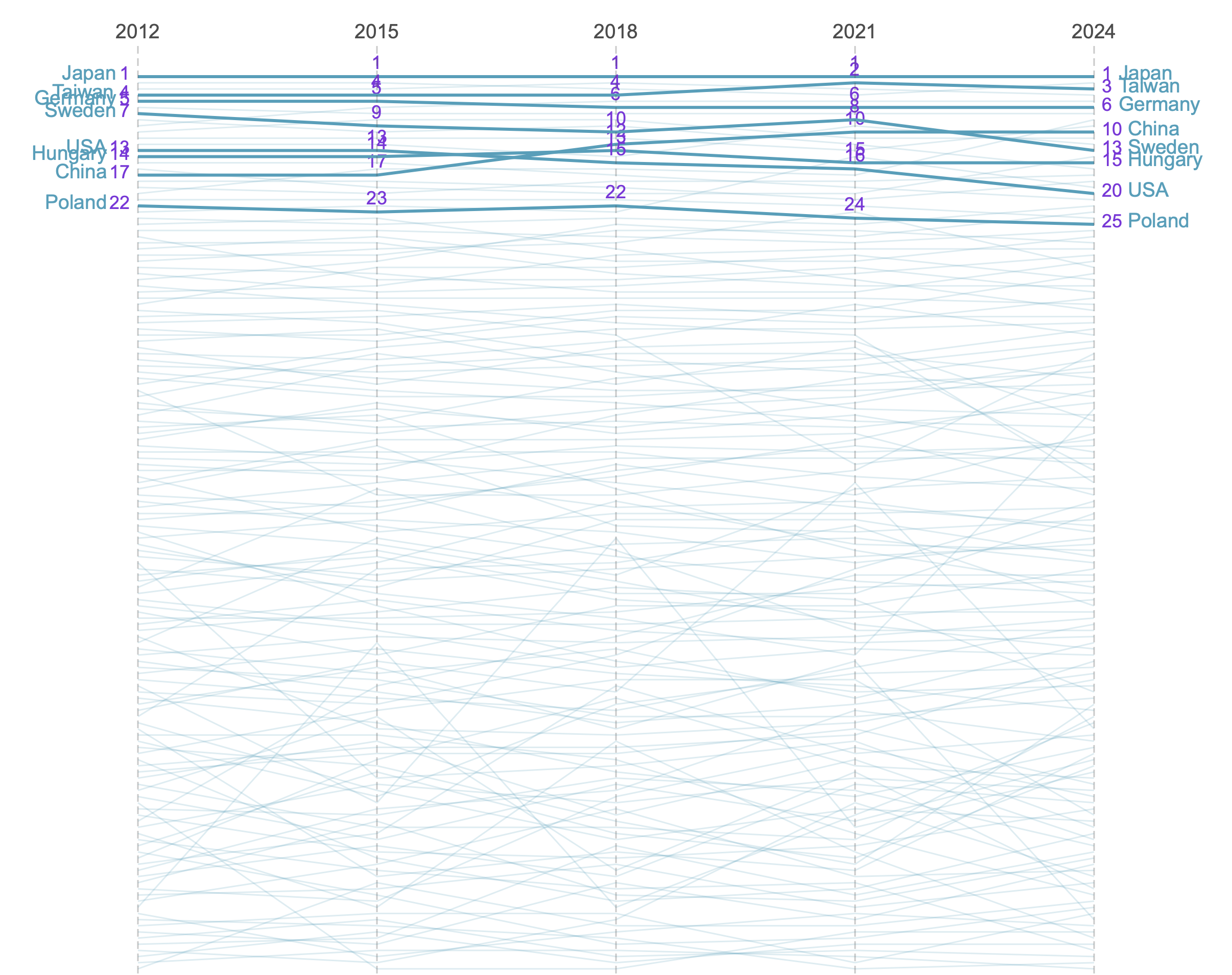
Germany remains one of the leading industrial countries, even though it dropped by one rank over the chart's timeline. I would not overinterpret this one-place movement. These rankings can change due to methodological shifts, changes in trade composition, and shifts in other countries' export structures. What we should take with us is that Germany is not a low-capability economy. It remains one of the most sophisticated industrial systems in the world.
This positioning aligns closely with Germany's focus on R&D expenditure as a % of GDP and in absolute terms.
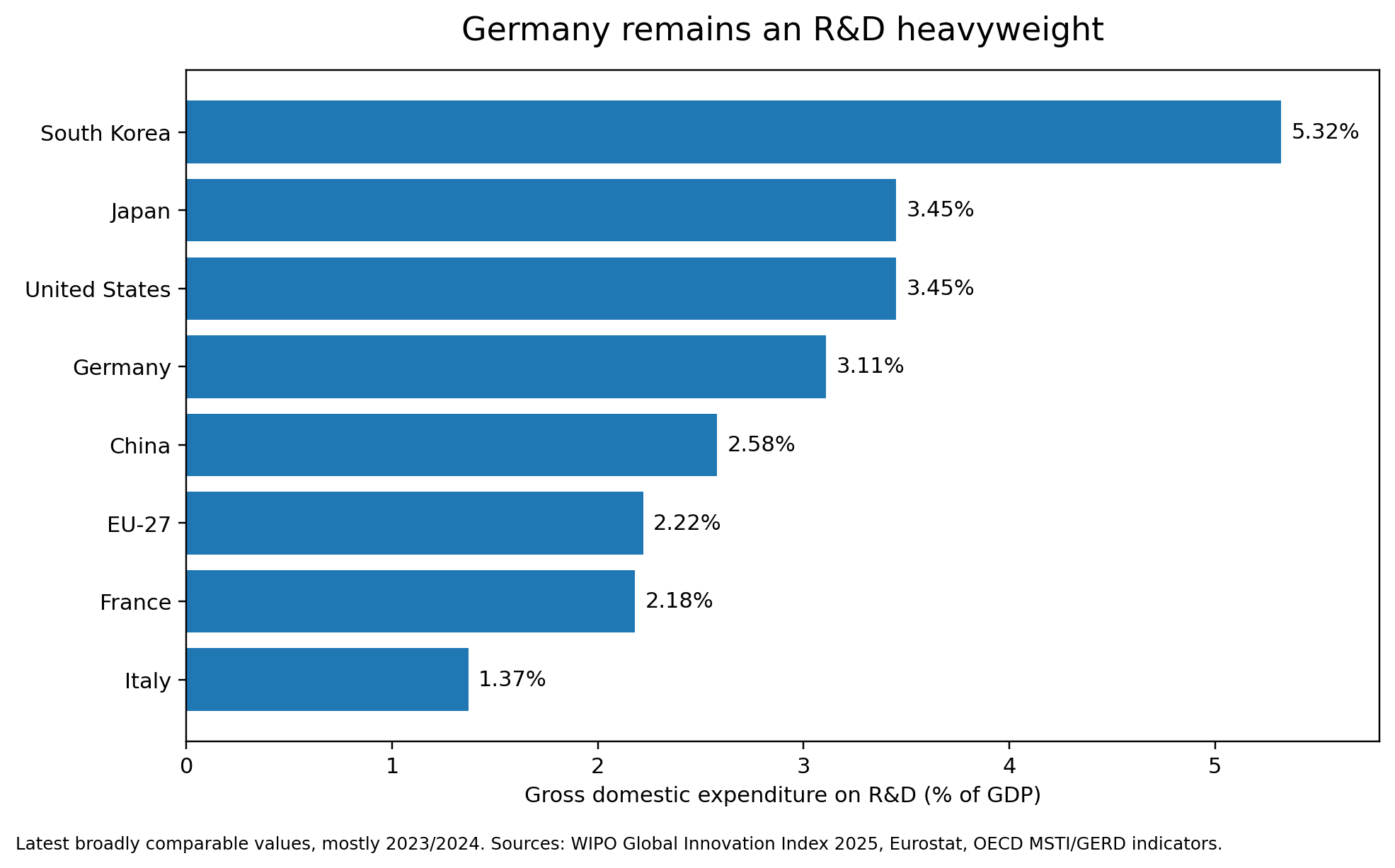
The chart above highlights Germany's engineering background and emphasis on research and development. This is also reflected in Germany's policies, which support collaboration between manufacturing industries and research institutes, serving as a prime global example. Germany created a set of institutions and policies that support cross-collaboration, as highlighted in a paper by the United Nations Industrial Development Organization.
This matters for the argument of this article. Germany's manufacturing problem is not that the country has already lost its industrial base or focus on the next generation of technologies. The problem is whether this highly complex manufacturing base can still renew its process capabilities fast enough. Germany lacks the technological absorptive capacity to adopt new manufacturing models.
What makes Germany stand out?
When reading about Germany's exports, we automatically think of the auto industry, but that misses the deeper structure. While cars make up a large part of Germany's export basket, it produces many of the components that other manufacturers in other countries need, such as machine tools, industrial equipment, automation systems, precision optics, specialty chemicals, and production technologies.
Examples include laser-cutting machines like Trumpf, lithography optics from Carl Zeiss (critical to ASML's EUV lithography machines), specialty polymers from BASF, and automation components from Bosch and Festo, just to name a few. These are products that other countries cannot easily replicate, and they make Germany the manufacturing base that other manufacturing bases depend on.
Japan has a similar capital-goods foundation to Germany but has a denser layer of robotics, semiconductor materials, and electronic components. Examples would be Shin-Etsu silicon wafers, FANUC robots, Murata passive components, things that, besides a few exceptions in Germany, like Infineon and Bosch, have never been built or built an extensive ecosystem around.
This comparison is important because it shows that Germany should not be analyzed as "just another car-exporting country." Germany sits upstream in the global manufacturing system. It produces parts of the productive infrastructure that other economies depend on.
If we look at Germany's export basketThe composition and focus on complex machinery, medications, and electronics become obvious.
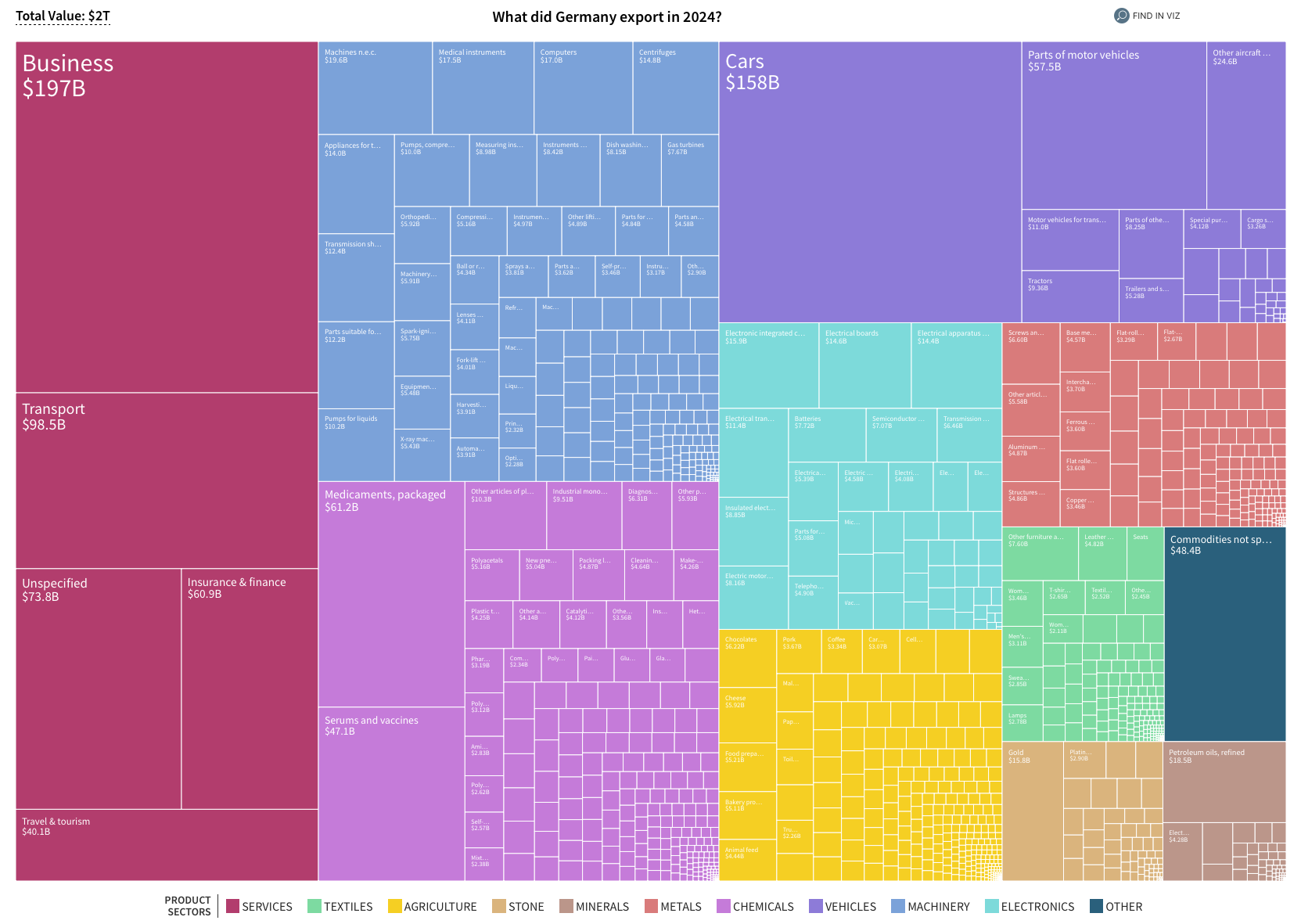
Germany exported a broad mix of complex goods and industrial capabilities. Cars are one visible part, but behind them sit many of the parts that make other factories and technologies work.
This is why Germany's industrial debate should not start from the assumption of collapse. Germany remains a high-complexity manufacturing economy.
Its problem is more specific: can this system adapt to the next layer of industrial capability?
or
Can Germany's industry increase its technological absorptive capacity?
This question matters because economic complexity is not static. Germany can remain strong in existing categories while losing momentum in the next ones. While German manufacturers optimize combustion-era automotive systems, traditional machinery, and established chemical processes, they can struggle to build the architecture required for software-defined manufacturing, battery supply chains, industrial AI, and highly automated greenfield production.
This is where we must move away from the large and well-known German corporations that are mostly discussed in literature and move to the enabling industrial layer that supplies the industrial materials to the upstream manufacturers - the industrial commons.
The industrial commons - where the value chains begin
The industrial commons is the shared productive capability that allows an economy to keep making, improving, and inventing complex products. The industrial commons comprise SMEs, SMMs, supplier networks, skilled labor, process knowledge, applied research, machine builders, tacit know-how, and institutional relationships. These are the hidden champions of the deutsche Mittelstand (SMEs). On the map, you can see the distribution of the commons across Germany.
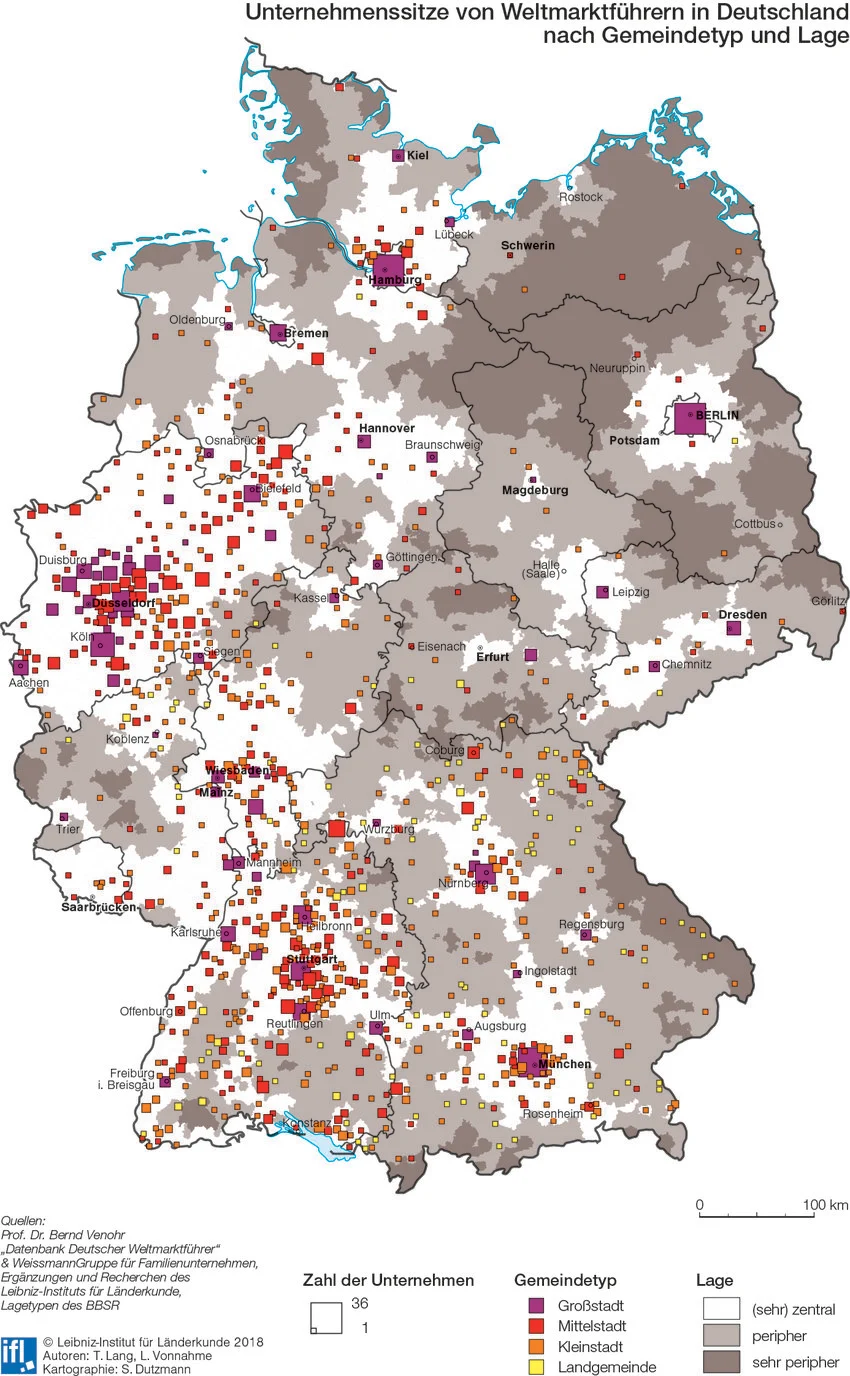
These hidden champions are highly specialized, often family-owned B2B companies that dominate niches but are not widely known publicly. These hidden champions are one visible expression of the German industrial commons. They are specialized suppliers, machine builders, component experts, tooling firms, and carriers of process knowledge that enable large OEMs and industrial sectors to remain innovative.
There are many articles discussing the importance of the industrial commons, and one I want to highlight is by Gary P. Pisano and Willy C. Shih, "Restoring American CompetitivenessThis article highlights the interconnected nature of the industrial commons and their larger counterparts, of which we hear in the news. His core thesis is that architectural innovation occurs only when the complete value chain is captured within the economy's industrial base. When parts of the manufacturing base are outsourced, a country's manufacturing base loses the ability to apply new processes and develop process and product innovations to the outsourced part.
Luckily, Germany's situation differs from that of the US, where much of the manufacturing base, deemed low-value in the 2000s and 2010s, was outsourced to low-cost locations.
Germany was spared the first China shock during the 2010s, but not the second one, which has been occurring over the last 3-5 years.
The second China shock is well-described by Daila Marin. Marin describes that China has evolved beyond copying existing technologies, now providing the world with high-end manufacturing equipment, cars, and various other equipment.
The China shock 2.0 is affecting Germany's exports to China overall. Car exports have been negatively affected because of China's EV manufacturing and battery supply chain.
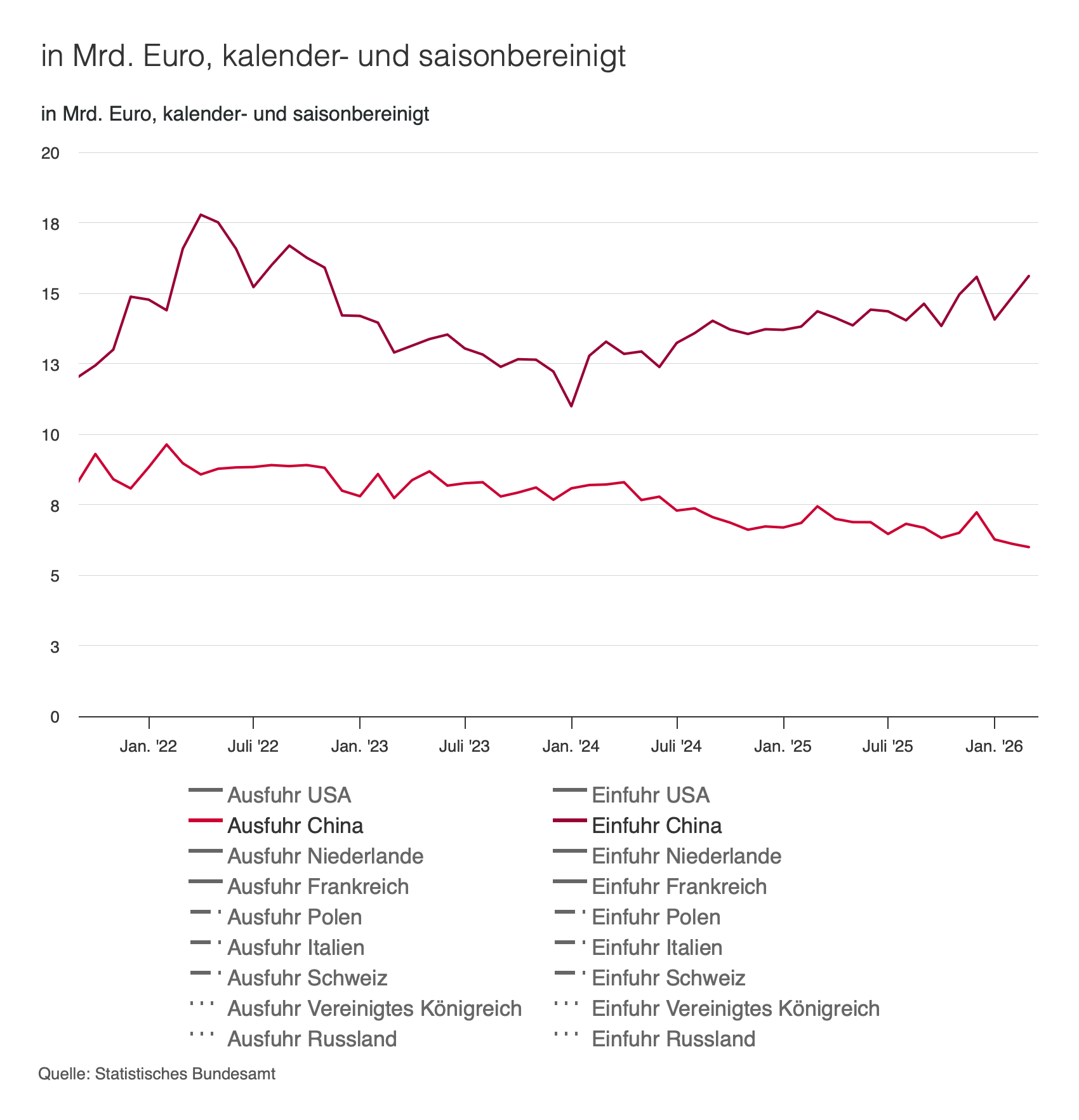
But exports of complex goods suffer from China's advances in manufacturing processes; nearly all products and services Germany exports to China are suffering.
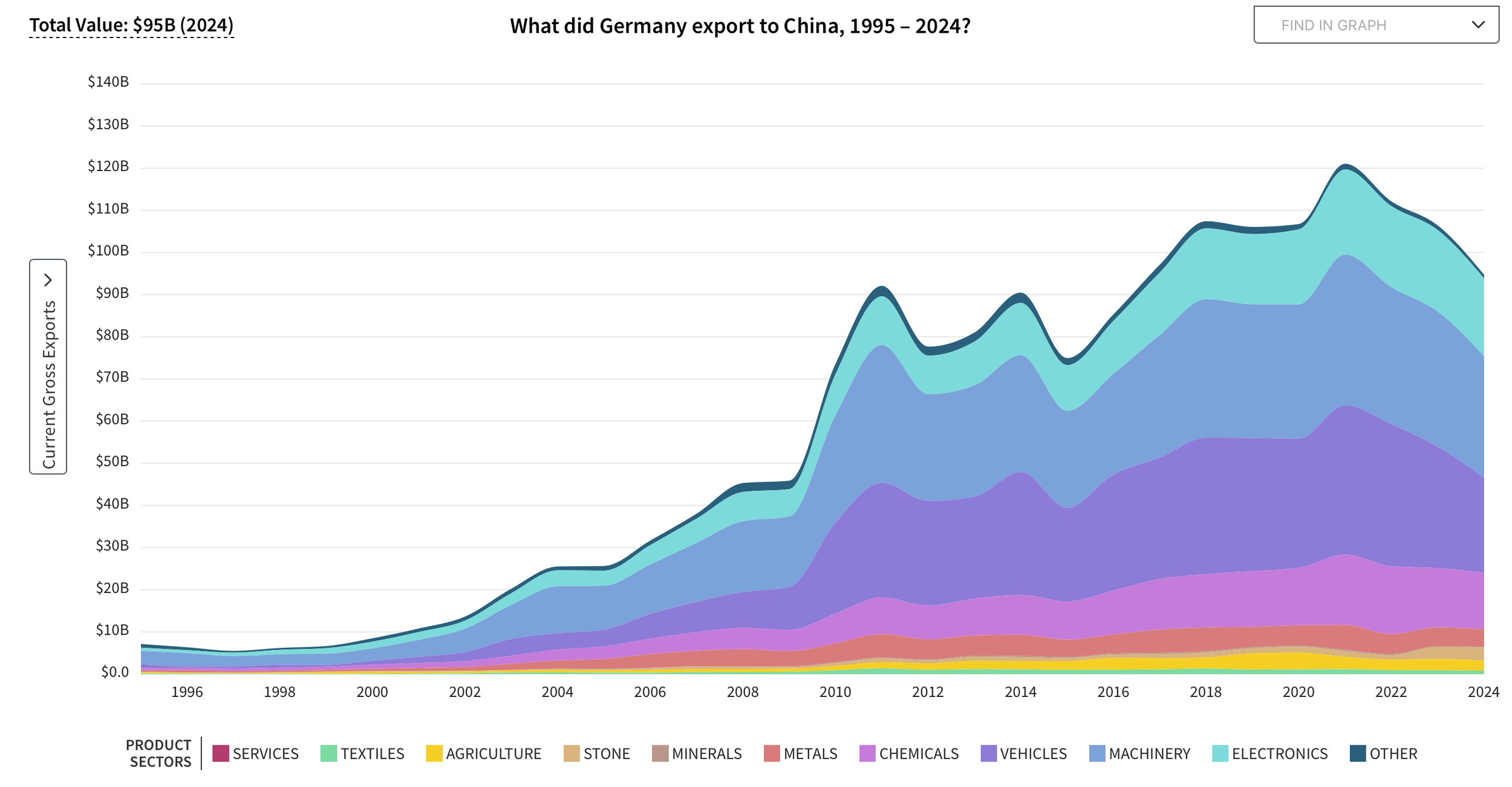
This is the real challenge and something that, in my view, will strongly affect the German commons over the next few years. While they were secured against the initial China shock, they are not safe against the new challenge, and they need to compete on efficiency and quality.
Germany has to compete on quality, not just cost and efficiency.
This will hurt and leave a lasting impact on Germany's industrial base, but it does not mean it's doomed, as mentioned in the previous sections and often described in other articles.
But brownfield manufacturing, internal politics, resistance to internal innovation, and talent misallocation are preventing German manufacturing companies from evolving in a positive direction.
Whether Germany's commons can absorb this new pressure depends on what is actually happening inside the firms. Here is what I've seen.
The Challenge with the German Commons
I experienced the realities of SMEs and SMMs and their brownfield challenges. New technologies can only be incorporated as a compromise between the old system, which must prevail, and the new technologies that cannot be fully utilized due to the existing framework in which they are placed.
I worked with a specialized industrial wheel manufacturer in Southern Germany with around 500 employees, and they wanted to digitize their production to enable remote monitoring, predictive maintenance, and increased efficiency. Strategically sound.
The company hired a new IT person to support the team with the smart manufacturing initiative. I provided support with documentation at a later stage.
This project was placed in the IT department, which was responsible for everything (production, databases, systems, machines, ... and internal IT tasks).
The first year was mainly writing down the current system architecture and workflows. Capturing all the dependencies. So far, the new digitization hire has been primarily responsible for documenting processes and gaps, while the other IT guys have mostly been busy keeping IT and production running.
Year two was where actual changes should have happened. Instead, it was the year we discovered even more dependencies on nearly all departments. Machine data, order information, and financial information were buried in the production datasheets, which meant that changing one thing triggers various changes across all departments. (The system was designed to work with paper; while everything was now digital, the workflow was identical to working with paper.)
That led to resistance. A lot of resistance.
We proposed a change to the database architecture for the product specification and to connect different tables, as we didn't see a need to separate the information. We received such a crazy response from the design team that we couldn't possibly make any changes to the database architecture. This change proposal was escalated beyond my belief... It took three days to resolve this issue, and discussions between various people and departments emerged, resulting in paralysis.
The new hire left after 2 years, as his role became a small project management role for minor changes and adjustments here and there, with no responsibility across the various systems. It was the endless fighting with other departments and systems that could not be touched because of their dependencies. Any change had to be placed on top of existing things, adding to the technical debt.
Even management can't work against those forces, as they are intrinsic and logically sound.
The pattern repeats on other projects in other companies I've been on.
New technology could be added on top. Anything that required touching the existing system was blocked by intrinsic forces. When changes are proposed, the response is procedural: "This is not how we work", "This hasn't been discussed", "This is not the right time".
I argue that new talent has no chance against these forces that I described. On the other hand, existing teams are overburdened with the old system and keeping it running. An overarching departmental-connecting strategy is missing; departments and individuals act in self-preservation, creating barriers to change. New talent hired to digitize processes experiences these barriers, and within a year or two, they become frustrated, and their position and attitude change over time.
It's not enough to have some management backing when other departments act in self-preservation.
Hansen, Lassen, and Waehrens (2024) extended Ghobakhloo's (2020) model of determinants for smart technology adoption, adding a 'Level 0' to capture the foundational knowledge gaps observed in 30 Danish manufacturing SMEs.
Their observations of Danish SMEs confirm my experiences with German SMEs (or the other way round, if you like).
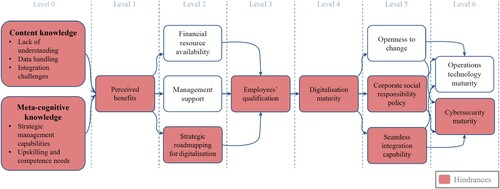
Hansen used a multi-level approach to digitalization and, in this figure, shows the hindrances along the path, especially at Level 0, where I experienced most of the hindrances in digitalization projects myself.
There are various other studies describing the issue of digitalization and smart manufacturing like:
Blinde Flecken in der Umsetzung von Industrie 4.0 - Identifizieren und verstehen (2022)
Industrie 4.0 im Mittelstand: Erfolgsfaktoren in der Organisation
The role of absorptive capacity and innovation strategy in the design of Industry 4.0.business models
All these publications provide similar descriptions and data points on SMEs and SMMs, including the challenges and strategies to circumvent them. It's mostly a replication of well-known information.
"Blinde Flecken in der Umsetzung von Industrie 4.0 - Identifizieren und verstehen" (2022), provides extensive industry surveys and datasets, supporting all of my claims for German SMMs.
Deadlock to Incremental Innovation
While my experience and literature on Industry 4.0 developments in SMEs look at the issue from the digitalization perspective, the underlying issue has been well-described in business literature like Conway's law, or by Henderson & Clark - architectural innovation.
I wrote extensively about these topics in my article."Architectural Innovation - Beyond the Innovator's Dilemma" The problem is not that leadership does not accept the importance of Industry 4.0, but the actors interpret it through existing architectures.
It's Conway's law in full effect: "Any organization that designs a system (defined broadly) will produce a design whose structure is a copy of the organization's communication structure."

My article "Lego's Digital Transformation" describes these challenges in context and what is needed to happen to create change. Henderson and Clark's work on architectural innovation helps explain why established firms struggle when the relationships among components, teams, and routines must change.
It also explains why SMEs misallocate new talent and lose them (motivationally and physically) over 2-3 years. In the picture above, I think the Microsoft depiction represents many German SMMs well.
Industry 4.0 doesn't allow existing structures to be copied in its architecture. It is not a tool upgrade, but an architectural reconfiguration of the factory.
Germany develops, but can't utilize
To make this very clear, Germany understands technological complexity and develops new technology like few others in the world can. But the story of the wheel manufacturer repeats itself at the national level.
The country develops the next generation of technology, but cannot deploy it inside its own production base. The chart below shows the macro signature of this pattern: investment in intellectual property - R&D, software, databases - has more than doubled since 2000 and reached an all-time high in 2025. Investment in machinery and equipment peaked in 2019 and has declined 12% since, with no recovery for six years.
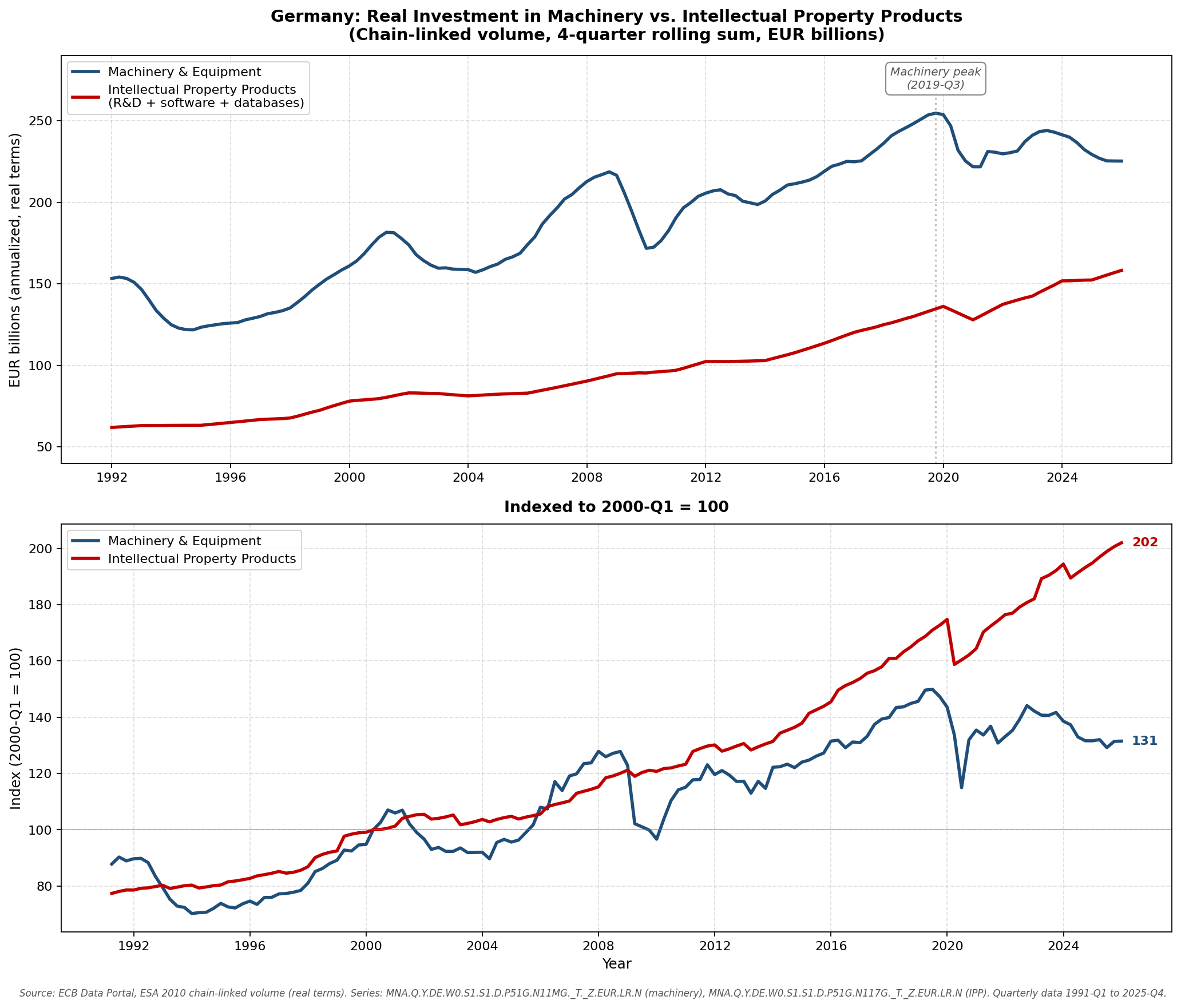
The popular reading of this is that Germany is transitioning to a knowledge economy. But how can you maintain a knowledge lead in a category where you're not operating yourself? Manufacturing is not a theoretical construct, but a practical exercise.
The argument of this article suggests a different reading. Firms are redirecting capital toward what they can absorb without architectural disruption. R&D and software can be added to a firm's portfolio without touching the production stack.
Machine investment requires exactly the disruption that the wheel manufacturer's database change triggered - the cascading reconfiguration that existing departments cannot survive without the help they do not have.
The capital displacement is not a strategy. It is a signature of an absorption problem operating at scale.
What does it all mean for Germany?
Germany's industrial difficulties are not caused by a lack of tools, capital, talent, or policy intent. It's also not due to higher energy costs or regulation.
It is caused by incumbent firms' inability to absorb architectural change within systems and organizations optimized for incremental innovation in a stable product category.
At the Hannover Fair, it became clear to me that German manufacturers don't need more digital tools. They require an architectural overhaul with technology that is already 10-15 years old, because deployment requires reconfiguring the architecture around which the firms have built their existence.
One could object that German firms are already adopting Industry 4.0 applications. While this is true, the problem is not whether individual tools appear inside factories. The problem is whether they change the architecture of production and processes.
Dashboards, pilots, AI modules, and IoT platforms can diffuse while the underlying workflow remains unchanged.
That's why Industry 4.0 will not save Germany and why digitalization doesn't diffuse through Germany's industrial base, especially the German commons that supply the machinery and tools to the larger manufacturers.
There are some discussions that Germany is transitioning to a knowledge economy - gets the direction right and causes wrong in my opinion. This is not a strategic redirection. It is firms making the only investment they can absorb.
Whether the position is defensible from here is not a question this article can and should answer. Germany's substrate is still present: rank six in economic complexity, the highest share of engineering among OECD economies, an applied research infrastructure unmatched by that of its peers, and a government institution supporting R&D and industry collaboration. Fraunhofer, Max-Planck, Mittelstand-Digital Zentren, the dual education system, and the supplier networks are unique institutions that further narrow the gap.
What is unclear is whether these institutions can be deployed to solve the absorption problem facing German manufacturers, or whether firm-level resistance and incentive misalignment will continue to consume the investment that arrives.
We need our manufacturing base not only for the next generation of engineers but also for security concerns; we need the intergenerational knowledge transfer of industrial processes to improve them. Otherwise, a lot of tacit knowledge will be lost.
German manufacturers have to think about internal resistance, new-employee turnover, team composition, and departmental incentives at a higher level to achieve lasting, more fundamental change in their system architecture. That means walking the path of most resistance, the path that likely angers the most senior people in the company.